
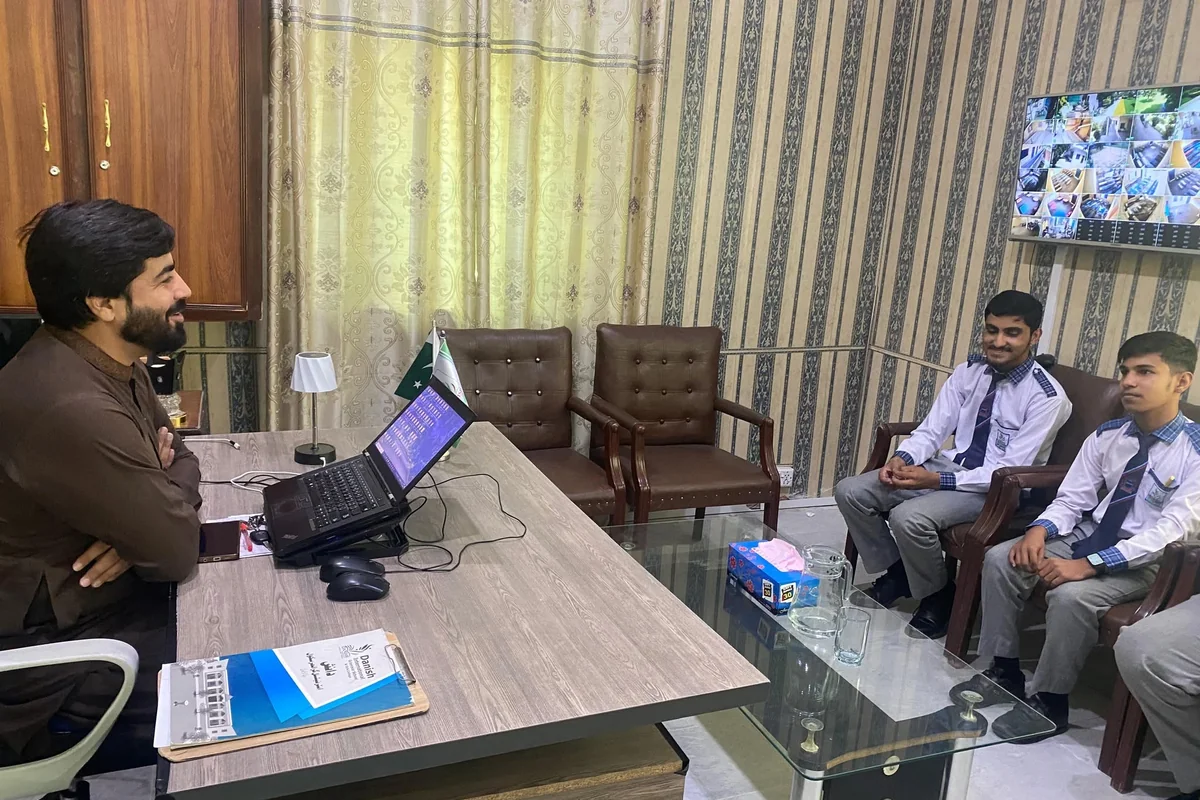
In 2011, I began working on an idea that had been forming for years: students in and around Dhudray Sharqi, District Gujrat, Punjab, Pakistan should not have to depend entirely on distant towns and cities for structured educational opportunities. Construction began that year, classes started in 2013, and the initiative gradually developed into a wider educational ecosystem.
This article is not a formula for opening a school. It is a practitioner’s reflection on what I learned while moving from a community need to a functioning institution. Every location has its own realities, but the principles of purpose, trust, persistence, systems and accountability travel well.
1. Begin with the community, not the building
The visible part of an institution is its building. The real beginning, however, is understanding the people it is meant to serve.
Dhudray Sharqi, District Gujrat, Punjab, Pakistan is connected to my family and personal history. At the time, the surrounding rural community had limited nearby options for students seeking organised education across both arts and science pathways. Families often had to consider distance, transport, cost, safety and the practical difficulty of sending young people—especially girls—to institutions farther away.
Years of working in academies and college management had shown me that educational demand does not disappear when local provision is weak. It becomes delayed, restricted or redirected. Some students travel. Some compromise on subjects. Some stop earlier than they should. Some families decide that the practical burden is too great.
“The first question was not, ‘What kind of building should we construct?’ It was, ‘What educational problem are families facing, and can a local institution solve it responsibly?’”
This distinction matters. A building-first mindset can produce impressive infrastructure without a sustainable educational purpose. A community-first mindset forces a leader to think about access, affordability, trust, staffing, curriculum, safety and long-term relevance from the beginning.
2. Turn concern into a clear institutional decision
Many people recognise problems. Institution building begins when someone accepts responsibility for organising a response.
By 2011, I had already gained experience through Cambridge Skilled Computer and English Academy, Bastion Computer & English Academy and City Girls College. Those roles developed my understanding of admissions, academic operations, student expectations, staff coordination and the daily discipline required to keep an educational organisation functioning.
The decision to establish an institution in Dhudray Sharqi, District Gujrat, Punjab, Pakistan was therefore not simply emotional. It combined personal commitment with practical experience. I understood that a rural institution would need more than enthusiasm. It would require years of attention, financial patience, continuous supervision and the willingness to solve problems that could not be predicted in advance.
A useful institutional decision should answer at least five questions:
- Need: What educational gap exists?
- Beneficiaries: Which students and families will be served?
- Offer: What level and type of education will be provided?
- Capability: What experience, people and resources are available?
- Commitment: Can leadership remain involved after the opening ceremony?
The final question is often the most important. Opening an institution is an event. Building one is a long-term responsibility.
3. Construction and educational planning must progress together
Construction began in 2011, but the work was never only physical. While the site developed, the educational model also had to take shape.
Walls, classrooms and facilities are essential, yet they do not automatically create a school culture. At the same time, policies and academic plans cannot operate without a functional environment. Both tracks must move together:
One of the most important lessons from the 2011–2013 development period was that delays in one area affect all the others. A building may be ready while recruitment is weak. Teachers may be available while admissions communication is unclear. Parents may be interested while operational systems are still immature.
Institutional leaders therefore need a combined readiness plan, not separate construction and academic plans that meet only at the end.
4. In a rural community, trust is part of the infrastructure
New institutions do not begin with a long history, established alumni or generations of public confidence. They begin with a promise. Families must decide whether that promise is credible.
In smaller communities, reputation moves quickly through personal experience and word of mouth. Parents observe whether leadership is accessible, whether commitments are honoured, whether teachers behave professionally and whether students are treated with seriousness and respect.
Trust cannot be created through advertising alone. It is built through visible conduct:
- Being available when parents need clarification
- Explaining programs and expectations honestly
- Avoiding promises that the institution cannot fulfil
- Responding to concerns without defensiveness
- Maintaining discipline without humiliating students
- Demonstrating that academic quality matters after admission
The response from parents when classes commenced in 2013 was highly encouraging. For me, that response was more than an admissions result. It confirmed that the original need was real and that the community was willing to support a serious local educational initiative.
5. Opening day is the beginning of the real test
Before opening, an institution is judged mainly by its plans. After opening, it is judged by daily performance.
Once classes began in 2013, the focus moved from preparation to consistency. The practical questions became immediate:
- Are classes starting on time?
- Are teachers prepared?
- Are students learning rather than merely attending?
- Are parents receiving accurate information?
- Are administrative records reliable?
- Are problems identified early?
- Is leadership present when standards begin to slip?
This stage taught me that institutional quality is not produced by one major decision. It is produced by hundreds of repeated decisions—many of them small, operational and invisible to the public.
A school can have an inspiring vision statement and still fail because attendance is not monitored, responsibilities are unclear, feedback is delayed or poor performance is tolerated. Sustainable institutions translate vision into routines.
6. Build people, not only positions
No educational institution can grow through the effort of one person. Leadership must gradually move from direct personal control to a system in which capable people understand their responsibilities and are supported in carrying them out.
Recruitment is only the first step. Staff development requires:
- Clear role descriptions
- Professional induction
- Academic planning support
- Classroom observation and constructive feedback
- Regular communication
- Accountability linked with guidance
- Recognition of good work
- Correction when standards are not met
In a developing institution, staff members are also helping to shape the culture. Their habits become organisational habits. Their communication becomes the institution’s public voice. Their treatment of students becomes the institution’s reputation.
This is why teacher development and administrative development cannot be treated as optional activities to be arranged only when problems become serious. They must be part of the operating model.
7. Allow the institution to grow around real needs
The original initiative did not remain limited to one school. Over time, it developed into educational provision for boys and girls, a girls college and later professional skills education through Canadian Advanced Skills Academy.
Growth, however, should not be confused with expansion for its own sake. Every new section or institution adds complexity: more staff, more students, more financial responsibility, more compliance, more communication and more opportunities for standards to become uneven.
Responsible growth asks:
- Does this new program solve a real educational need?
- Can it be staffed properly?
- Can quality be monitored?
- Will it strengthen or distract from existing institutions?
- Are families being offered genuine value?
The strongest reason to expand is continuity of opportunity. When students can progress through different stages of education within a trusted local ecosystem, families gain stability and the institution gains a deeper responsibility for long-term development.
8. Eight leadership lessons I would carry into any new institution
- Purpose must be specific. “Improving education” is too broad. Define the community, the gap and the practical change the institution is meant to create.
- Visible leadership builds confidence. In the early years, families and staff need to see that decision-makers are accessible and accountable.
- Infrastructure and systems must develop together. A good building with weak operations will disappoint families; strong intentions without adequate facilities will restrict delivery.
- Trust grows through consistency. Reputation is created by what happens every day, not only by ceremonies, posters or announcements.
- Staff quality determines institutional quality. Recruitment, development, supervision and role clarity deserve continuous attention.
- Parent communication is a leadership function. Families should understand expectations, progress, concerns and the institution’s educational direction.
- Growth should follow capability. Expand only when leadership can protect standards in both the new and existing areas.
- The founder must eventually build systems that work without constant personal intervention. Sustainable institutions require delegation, reporting and accountability.
9. What I would caution new education founders against
Experience also clarifies what should be avoided.
Do not confuse attention with trust.
A heavily promoted opening may attract interest, but only educational quality and responsible behaviour retain families.
Do not hire only to fill vacancies.
A weak appointment can affect classrooms, parent confidence and team culture far beyond one position.
Do not delay basic systems.
Attendance, fee records, admissions documentation, academic plans, communication procedures and reporting should not depend on memory or informal messages.
Do not expand because competitors are expanding.
Institutional decisions should be based on community need, internal capacity and educational purpose.
Do not assume that the founder’s personal effort can replace organisational development.
Hard work may launch an institution, but systems, teams and leadership development sustain it.
10. What the journey came to mean
The most meaningful outcome was not simply the completion of a building. It was the creation of a local educational pathway that families could recognise as their own.
Institution building changed my understanding of leadership. It showed me that educational leadership is not limited to academic knowledge or administrative authority. It is the ability to connect purpose with people, resources, systems, standards and long-term responsibility.
It also reinforced a principle that continues to guide my work: communities do not need institutions that merely exist. They need institutions that keep learning, improving and earning trust.
The journey from construction in 2011 to the start of classes in 2013 was demanding, but it became the foundation for later work in school and college leadership, multi-school management, teacher development, educational partnerships and professional skills training.
Conclusion
Building an educational institution in an underserved rural community requires more than capital, a building or an academic plan. It requires an accurate understanding of local needs, sustained leadership presence, capable people, transparent communication and the patience to convert a vision into reliable daily practice.
For leaders considering a similar journey, my advice is simple: begin with a real educational need, prepare for a long commitment, build trust before seeking scale and create systems early enough that quality does not depend on one person.
The institution may begin with one decision, but its value is measured through the opportunities it continues to create for students, educators and families.
Related public institutional pages
These official channels provide additional context on the schools, college and skills academy that developed from the wider institution-building journey.
Location: Dhudray Sharqi, District Gujrat, Punjab, Pakistan.

Faruukh Nadeem
Faruukh Nadeem is an educational leader, institution builder and school-management professional whose career began in 2007. His work focuses on institutional development, teacher growth, parenting education, student opportunity and community-based education.